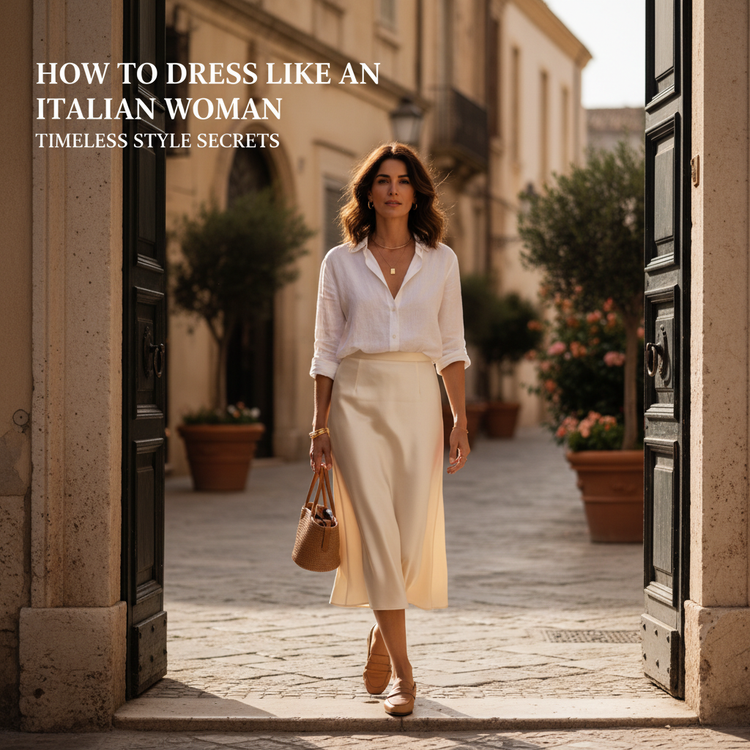

Walk into any boutique that stocks Italian pieces and you can usually spot them before you check the label. The fabric sits differently. The stitching is cleaner. The cut follows the body instead of fighting it. That is not an accident of taste, it is the product of a manufacturing culture that has been refined for centuries.
This guide breaks down exactly what Italian fashion is, why it earned its reputation, and how you can bring that same quality into your own wardrobe or your own shop rail.
What Is Italian Fashion?
The meaning of Italian fashion
Italian fashion refers to clothing designed, cut, and usually produced within Italy, where regional textile and tailoring traditions shape everything from fabric choice to finishing. The term covers everything from Milan runway collections to the small family run workshops in Puglia and Veneto that supply much of Europe with linen and knitwear.
The history of Italian fashion
Italy has been a centre of textile production since the medieval trading cities of Florence, Venice, and Genoa built their wealth on silk and wool. The modern industry took shape after World War Two, when Florence hosted the first Italian ready to wear shows in 1951, drawing American buyers away from Paris and putting Milan on a path to becoming a global fashion capital by the 1970s and 1980s.
Why Italian fashion is famous worldwide
Italian fashion built its name on a simple promise: garments that look expensive because the materials and construction genuinely are. Decades of consistent quality control across mills, tanneries, and ateliers gave the label Made in Italy a meaning that buyers trust without needing to inspect every seam themselves.
Why Is Italian Fashion Considered the Gold Standard?
Exceptional craftsmanship
Many Italian garments still pass through skilled hands at some stage of production, whether that is hand finished buttonholes on a blazer or hand rolled hems on a linen dress. Training is often passed down within families or small ateliers, so techniques survive that larger factories elsewhere have automated away.
Premium fabrics
Italy is home to some of the world most respected textile mills, particularly in the Biella and Como regions for wool and silk. Buying Italian often means buying closer to the fibre source, with fewer middlemen between the mill and the finished garment.
Timeless designs
Italian design tends to favour proportion and line over decoration, which is why a well cut Italian blazer from ten years ago can still look current today. That restraint is deliberate, since a garment built to be worn for years needs to avoid anything too tied to a single season.
Attention to detail
Look at the inside of an Italian made garment and you will usually find the same care as the outside, from bound seams to matched patterns at the shoulder. These details rarely show up in a product photo, but they are exactly what separates a garment that lasts from one that does not.
What Are the Characteristics of Italian Fashion?
Elegant silhouettes
Italian clothing tends to skim the body rather than cling to it or drown it, favouring a silhouette that looks put together without looking rigid.
Neutral colour palettes
Cream, camel, chocolate, olive, and black form the backbone of most Italian collections, with colour used sparingly as an accent rather than the main event.
Tailored fits
Even casual pieces like a linen shirt or a pair of trousers are usually cut with some shape built in at the waist or shoulder, so nothing reads as shapeless.
High quality fabrics
Natural fibres dominate, particularly linen, cotton, silk, and wool, chosen because they age well, breathe better, and photograph with a richness synthetic blends struggle to match.
Italian Fashion vs French Fashion
Design philosophy
French fashion leans toward understated Parisian chic built around a handful of perfect basics, while Italian fashion leans warmer and more expressive, with richer colour and a stronger emphasis on fabric texture.
Everyday wear
Italian everyday pieces tend to feel a little more relaxed and body conscious, while French daywear often prioritises a slightly more austere, uniform like simplicity.
Luxury brands
Both countries produce world leading luxury houses, Italy with names like Gucci, Prada, and Max Mara, France with Chanel, Dior, and Saint Laurent, but Italian houses are generally known for craftsmanship and material quality first, French houses for silhouette and conceptual design first.
Which style suits you?
If you are drawn to warmth, texture, and a slightly more relaxed elegance, Italian style will likely suit you better. If you prefer sharp minimalism and monochrome restraint, French style may feel like a more natural fit.
Italian Fashion vs Fast Fashion
Quality comparison
Italian garments are typically constructed with reinforced seams, natural fibres, and finishing steps that fast fashion skips to hit a lower price point, which is why an Italian made piece often survives years of regular wear that would wear a fast fashion equivalent thin within a season.
Sustainability
Because Italian pieces are built to last and are more often made from natural, biodegradable fibres, they tend to have a lower long term environmental footprint per wear than garments designed for a short lifecycle.
Cost per wear
A higher upfront price on an Italian piece often works out cheaper over time once you divide the cost by the number of wears, especially compared with fast fashion items that are replaced every year or two.
What Fabrics Are Common in Italian Fashion?
Linen: Grown and woven extensively in Italy, linen is prized for its breathability and the relaxed, lived in texture it develops with wear.
Cotton: Italian cotton is typically combed and woven to a tighter, smoother finish than mass market cotton, giving shirts and dresses a noticeably cleaner drape.
Silk: Como in northern Italy has produced silk since the sixteenth century and remains one of the most respected silk printing and weaving centres in the world.
Wool: Biella is home to some of the finest wool mills anywhere, supplying the soft, durable knitwear and tailoring fabric found in Italian jumpers and coats.
What Clothing Pieces Define Italian Style?
Linen dresses - A relaxed linen dress in a neutral shade is close to a uniform for Italian summer style, easy to dress up or down.
Relaxed trousers - Wide leg and barrel leg trousers in linen or cotton blends are a staple, offering comfort without losing shape.
Tailored blazers - A soft shouldered, unstructured blazer is the single easiest way to add an Italian finish to an otherwise casual outfit.
Knitwear - Fine gauge wool and cotton knitwear, often in a wrap or layering style, gives Italian outfits their soft, unfussy texture.
Shirts - A well cut cotton or linen shirt, usually left slightly open and untucked, is a foundation piece across almost every Italian outfit.
How to Dress Like an Italian Woman
Wardrobe essentials
Start with a linen dress, a pair of relaxed trousers, a soft blazer, a knit layer, and a simple leather bag. These five pieces mix and match into most of the outfits you will actually need.
Colour combinations
Stick to two or three tones per outfit, usually a neutral base with one warmer accent such as rust, olive, or terracotta, rather than reaching for a full palette at once.
Layering tips
Layer a lightweight knit or jacket over a dress or shirt rather than switching outfits entirely between seasons. This is how the same core wardrobe stretches from spring through autumn.
Accessories
Keep jewellery minimal, invest in one good leather bag, and choose a shoe that is comfortable enough to actually walk in, since Italian style is built around cities meant to be explored on foot.
Best Italian Fashion Trends This Year
This season leans into richer, earthier colour, with rust, olive, and chocolate brown appearing across linen and knitwear collections alongside the usual neutrals. Relaxed tailoring continues to dominate, with soft blazers and barrel leg trousers replacing the more rigid, fitted shapes that were popular a few years ago. Texture is also doing a lot of work this year, from ribbed knits to slubbed linen weaves that add interest without adding pattern.
Why Italian Fashion Never Goes Out of Style
Italian design leans on proportion, natural fabric, and restrained colour rather than chasing whatever is trending on a given week, which means the pieces rarely look dated even years later. A well cut linen dress from five years ago still works today because it was never built around a passing trend in the first place. That longevity is exactly why so many boutiques treat Italian stock as a safe, repeatable buy season after season.
Common Italian Fashion Mistakes
The most common mistake is over accessorising, since Italian style relies on restraint rather than piling on jewellery or prints. A second mistake is sizing garments too tightly, when the relaxed, body skimming fit is actually part of the look. A third is ignoring fabric care, since natural fibres like linen and wool need gentler washing than synthetic blends to keep their shape and softness.
Where to Buy Authentic Italian Clothing in the UK
Look for suppliers who state their manufacturing origin clearly and can answer questions about fabric composition without hesitation, since genuine Made in Italy stock usually comes with that transparency built in. Independent boutiques and market sellers across the UK increasingly source directly from Italian wholesalers, which keeps prices reasonable while still delivering the fabric quality and finish that mass market imports rarely match.