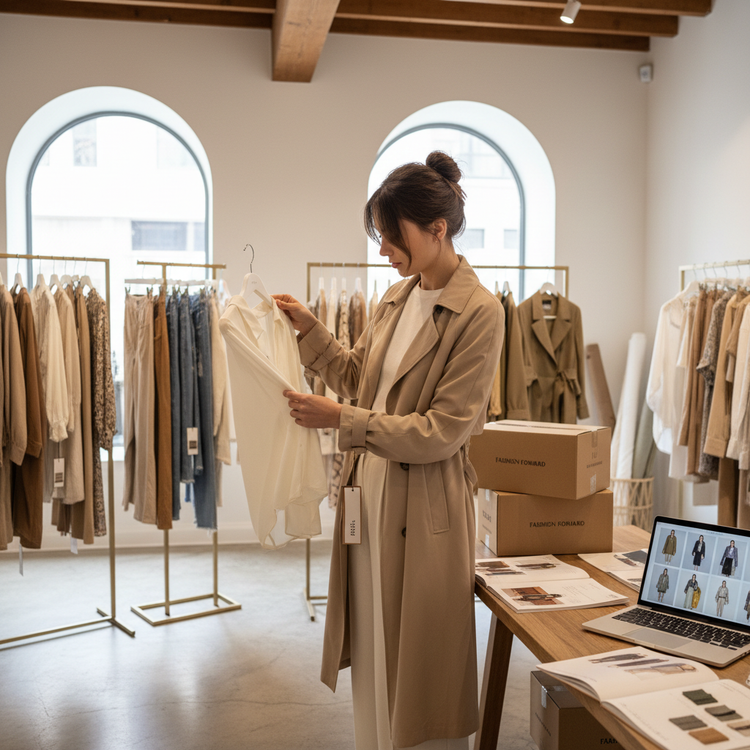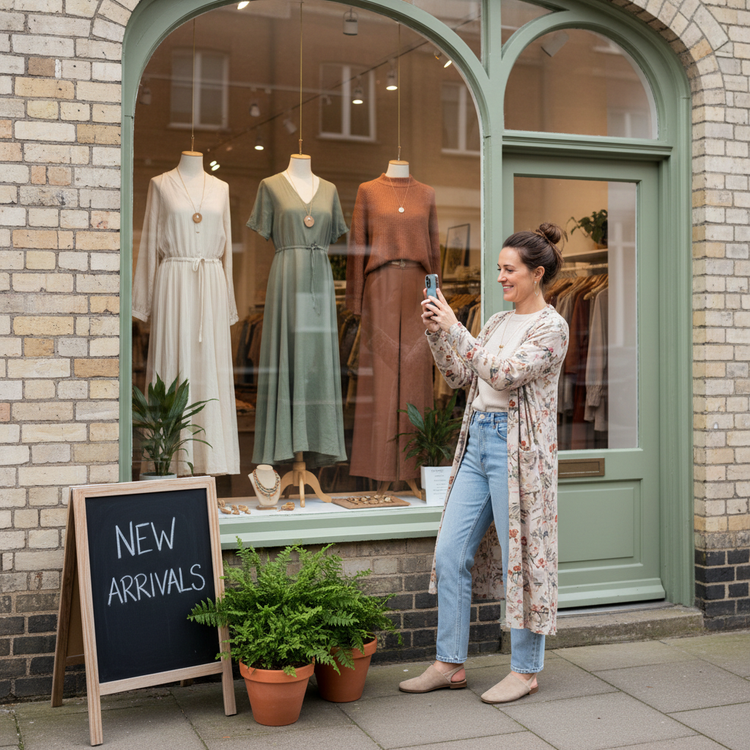

Every retailer searching for the best selling wholesale clothing UK wide wants the same clean answer, and there isn’t one. What counts as best selling wholesale clothing depends on who your customers are, where you’re trading, and what price they’ll pay without hesitating. A linen tunic that shifts in three days in a market town in Cheshire can sit for a month as unsold wholesale clothing UK stock in a city centre boutique two counties away.
That said, when you look across the UK independent trade, some categories of wholesale women’s clothing UK retailers stock move consistently faster than others, and some carry far better margin. Below is what actually performs as popular wholesale clothing and best selling wholesale clothes for UK boutiques right now, and more usefully, why.
The categories of popular wholesale fashion that consistently move
Linen, and why it stopped being a summer category
Linen used to be a June-to-August buy. It isn’t any more. UK boutiques now sell linen tops and trousers most of the year, partly because layering has changed how customers wear it and partly because the fabric appeals strongly to the 40-plus customer who forms the core of most independent shops.
Two things make it commercially attractive beyond the demand. It photographs well, which matters if any part of your business is Instagram or online. And customers who buy one linen piece tend to come back for more of the same, because it becomes a wardrobe they’re building rather than a one-off purchase.
The risk with linen is that it’s easy to buy badly. Cheap linen creases hard, feels papery and washes poorly, and a customer who’s disappointed once won’t try again. This is a category where quality gaps between suppliers show up immediately in the hand.
Lagenlook
Lagenlook, the layered, generous-fit style built around natural fabrics, has a genuinely devoted UK customer base. It’s not a mass-market category, but the customers who want it want it specifically, know exactly what they’re looking for, and struggle to find it on the high street.
That’s what makes it commercially interesting for an independent. You’re not competing with Next or M&S on price and availability. You’re serving a demand the big chains largely ignore, which means less price pressure and customers who travel to you rather than picking up something similar in town.
It also carries well across sizes, which matters, and tends to sell in multiples because the whole point of the style is combining pieces.
Occasion dresses, in bursts
Dresses are the highest-value item most independents sell and the demand is intensely seasonal. Wedding season from roughly May through September, then a second run for Christmas parties and New Year.
Handled well, this is where your best margins come from. Handled badly, it’s where dead stock comes from, because an occasion dress that misses its window sits until next year. The rule most experienced buyers follow is to buy narrow and deep on styles they’re confident about rather than broad and shallow, and to buy in ahead of the season rather than during it.
There’s a fuller piece on stocking occasion dresses specifically, since the buying approach differs enough to warrant it.
Tops and tunics, the volume engine
Nobody’s most exciting category and usually the one paying the bills. Tops and tunics sell in volume, at accessible price points, to customers who buy them repeatedly rather than once a season.
They’re also the easiest entry purchase for a customer who doesn’t know your shop yet. Someone who won’t spend £75 on a dress from an unfamiliar boutique will spend £28 on a top, and that’s how a first-time visitor becomes a regular.
Buy the breadth here. Tops are where a wide range of styles earns its keep, because customers browse them and pick, rather than arriving with a specific item in mind.
Knitwear
Reliable autumn and winter volume, and one of the categories where quality is most visible to the customer. A jumper that pills after three wears generates complaints in a way a top rarely does.
Knitwear also has a longer selling window than most seasonal stock, running from September through February in most of the UK, which reduces the risk of being caught with unsold units.
Trousers and jumpsuits
Both sell steadily rather than spectacularly, and both have a specific commercial advantage: they’re items customers often struggle to find a good fit in, which means a shop that stocks a fit that works for someone gets that customer back repeatedly.
Jumpsuits in particular tend to be under-stocked by independents relative to demand, partly because buyers worry about sizing. If your supplier gives you accurate measurements and you can advise confidently on fit, there’s usually room in this category.
What profitable wholesale clothing actually means here
Fast selling wholesale clothing and profitable wholesale clothing aren’t the same thing, and conflating them is a common buying mistake.
A £9 top with a 2.5x markup makes you £13.50 a unit and might sell forty units a month. A £30 dress at the same markup makes you £45 and might sell six. The dress category looks better per sale and the tops category might well contribute more cash over the month.
What you’re actually optimising is a combination of margin per unit, sell-through rate, and how much capital each category ties up. Categories that sell slowly but reliably at high margin, occasion dresses being the obvious one, are worth stocking. Categories that sell slowly at low margin are worth cutting.
Track this properly rather than by feel. Most retailers can name their bestsellers and far fewer can name their most profitable lines, and they’re often not the same items.
Buying against demand instead of guessing
The categories above are a starting point, not a shopping list. Three things sharpen it:
Your own sales data beats any article. Once you’ve traded a season, what sold and what didn’t is more reliable than any general guidance including this. Buy more of what moved, and be honest about what didn’t rather than reordering it hoping it’ll do better this time.
Watch what your customers ask for and can’t get. The requests you can’t fulfil are free market research. If four people this month asked for something you don’t stock, that’s a stronger signal than any trend report.
Buy small on anything new. Testing a style in small quantities before committing is how you find the next bestseller without betting the season on it. This is far easier with suppliers who don’t impose per-style minimums, since it means you can trial six new styles for what one would otherwise cost you.
Wholesale clothing trends UK retailers should watch
Broad patterns in women’s wholesale fashion and wholesale fashion UK worth being aware of, with the caveat that any trend claim ages quickly:
-
Natural fabrics over synthetics. Customers increasingly check composition labels, and linen, cotton and viscose blends outperform polyester at the same price point in most independent shops.
-
Extended size ranges. Independents that stock beyond a 16 consistently report those sizes selling through fastest, largely because availability elsewhere is poor.
-
Made in Italy as a stated selling point. Provenance has become something customers actively ask about, and it supports a higher price point than unattributed stock.
-
Year-round rather than tightly seasonal buying. UK weather has made rigid season buying less reliable. Transitional pieces that work across two seasons carry less risk than anything narrowly summer or winter.